
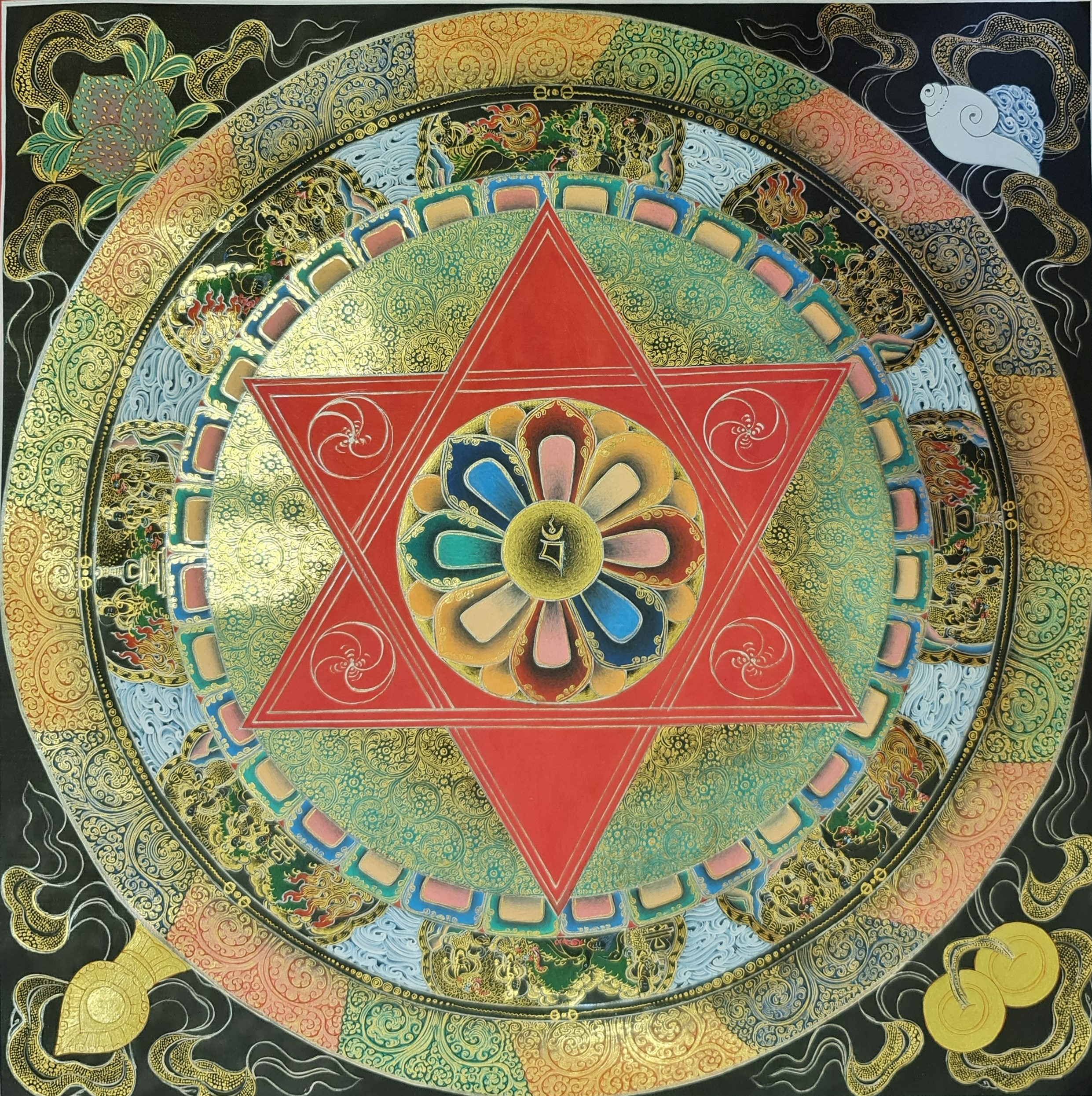
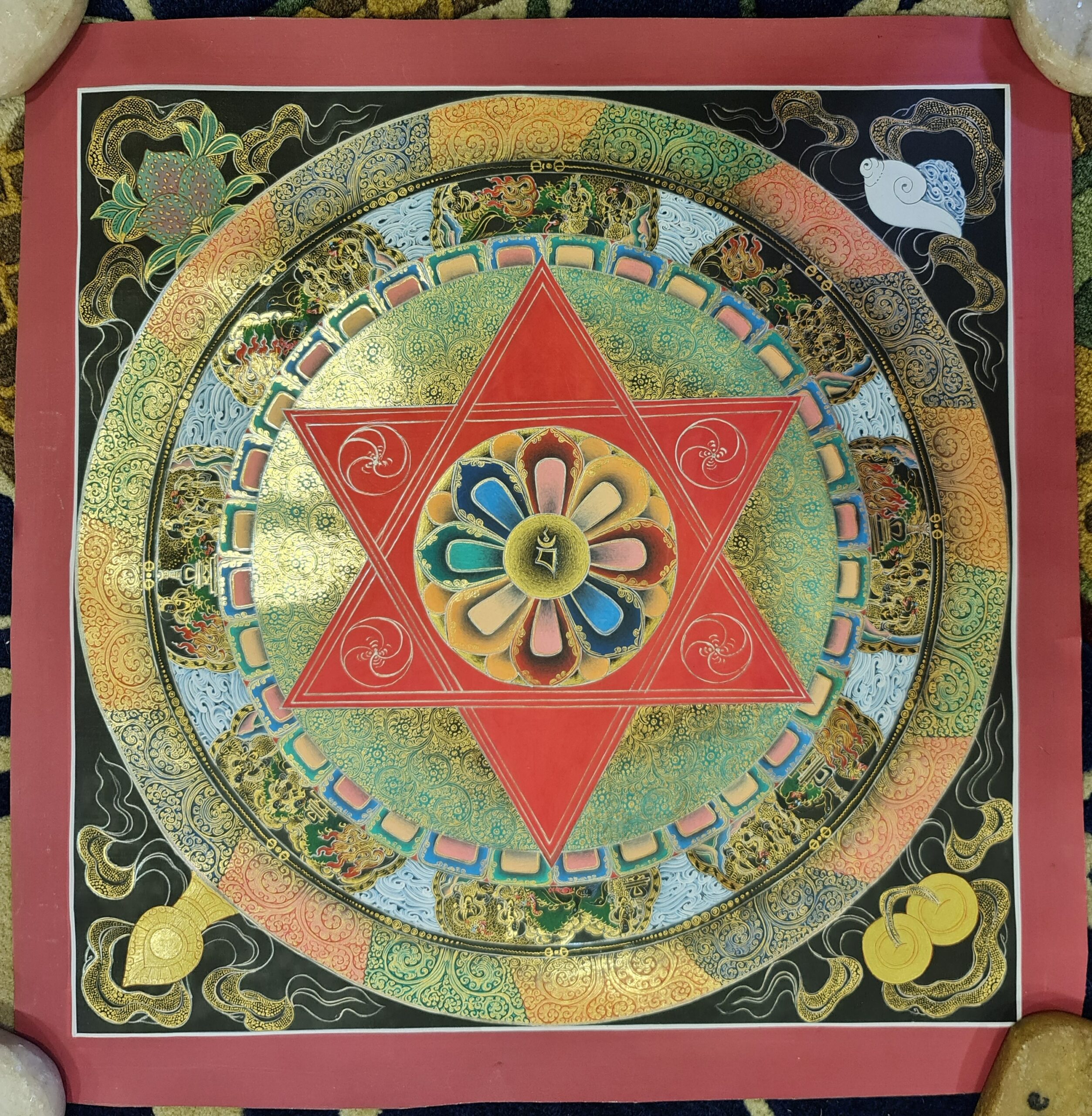
Mandala (Sanskrit: “circle”)
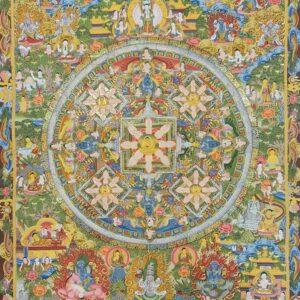
In Hindu and Buddhist Tantrism, a symbolic diagram used in the performance of sacred rites and as an instrument of meditation. The mandala is basically a representation of the universe, a consecrated area that serves as a receptacle for the gods and as a collection point of universal forces. Man (the microcosm), by mentally “entering” the mandala and “proceeding” toward its centre, is by analogy guided through the cosmic processes of disintegration and reintegration.
Mandalas in China, Japan, and Tibet are basically of two types, representing different aspects of the universe: the garbha-dhatu (Sanskrit: “womb world”; Japanese taizō-kai), in which the movement is from the one to the many; and the vajra-dhatu (Sanskrit: “diamond [or thunderbolt] world”; Japanese kongō-kai), from the many into one. Mandalas may be painted on paper or cloth, drawn on a carefully prepared ground with white and coloured threads or with rice powders (as for Buddhist Tantric ceremonies of initiation), fashioned in bronze, or built in stone, as at Borobudur, in central Java. There the circumambulation of the stupa (a commemorative monument) is tantamount to the ritual approach to the center.
Similar ritual drawings have been found in cultures other than Hindu and Buddhist—for example, in the sand paintings of the North American Indians. The Swiss psychologist Carl Jung published studies of mandala-like drawings executed by his patients. In his view, the spontaneous production of a mandala is a step in the individuation process—a central concept in Jung’s psychological theory—and represents an attempt by the conscious self to integrate hitherto unconscious material.
Size without Brocade: 13 inches by 13 inches



Reviews
There are no reviews yet.