
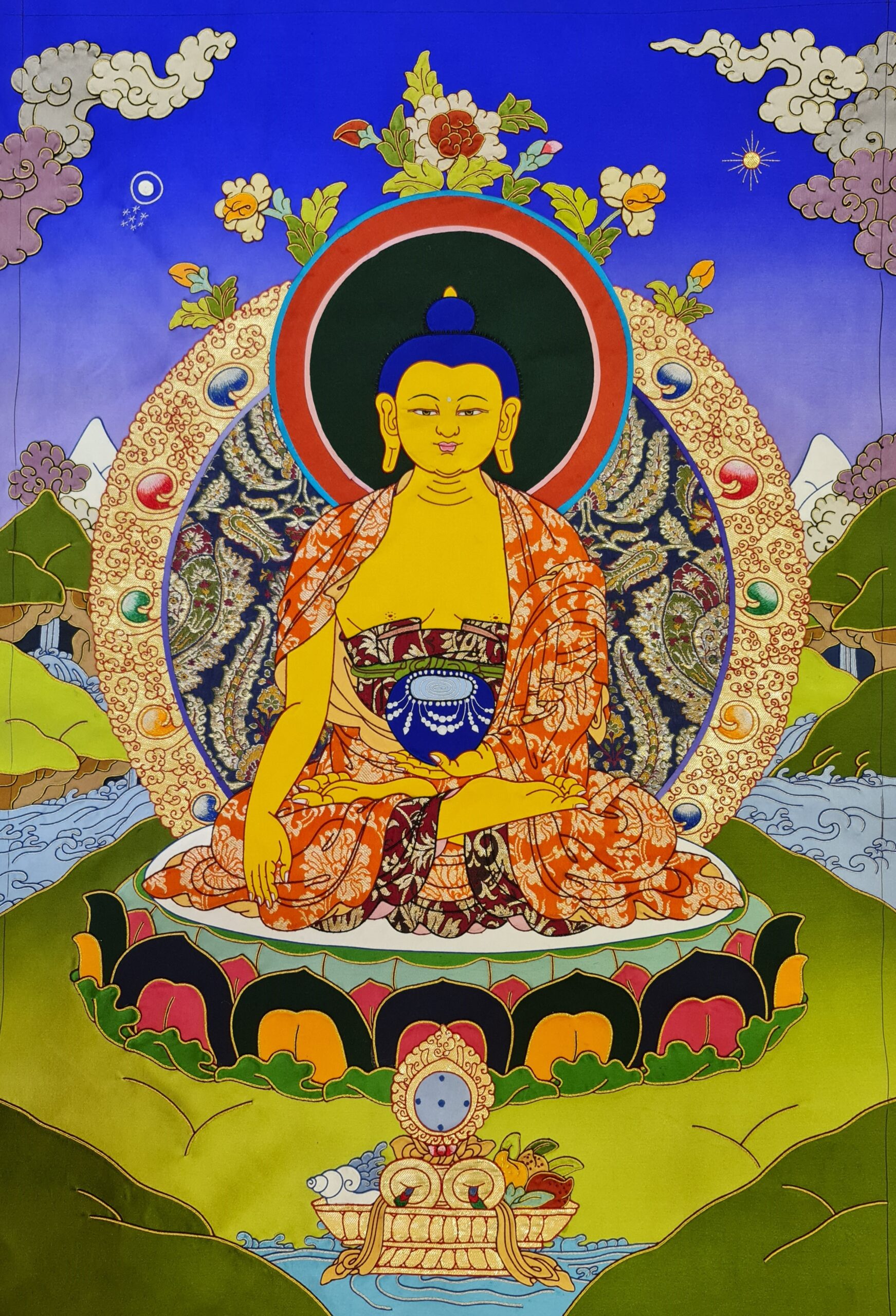
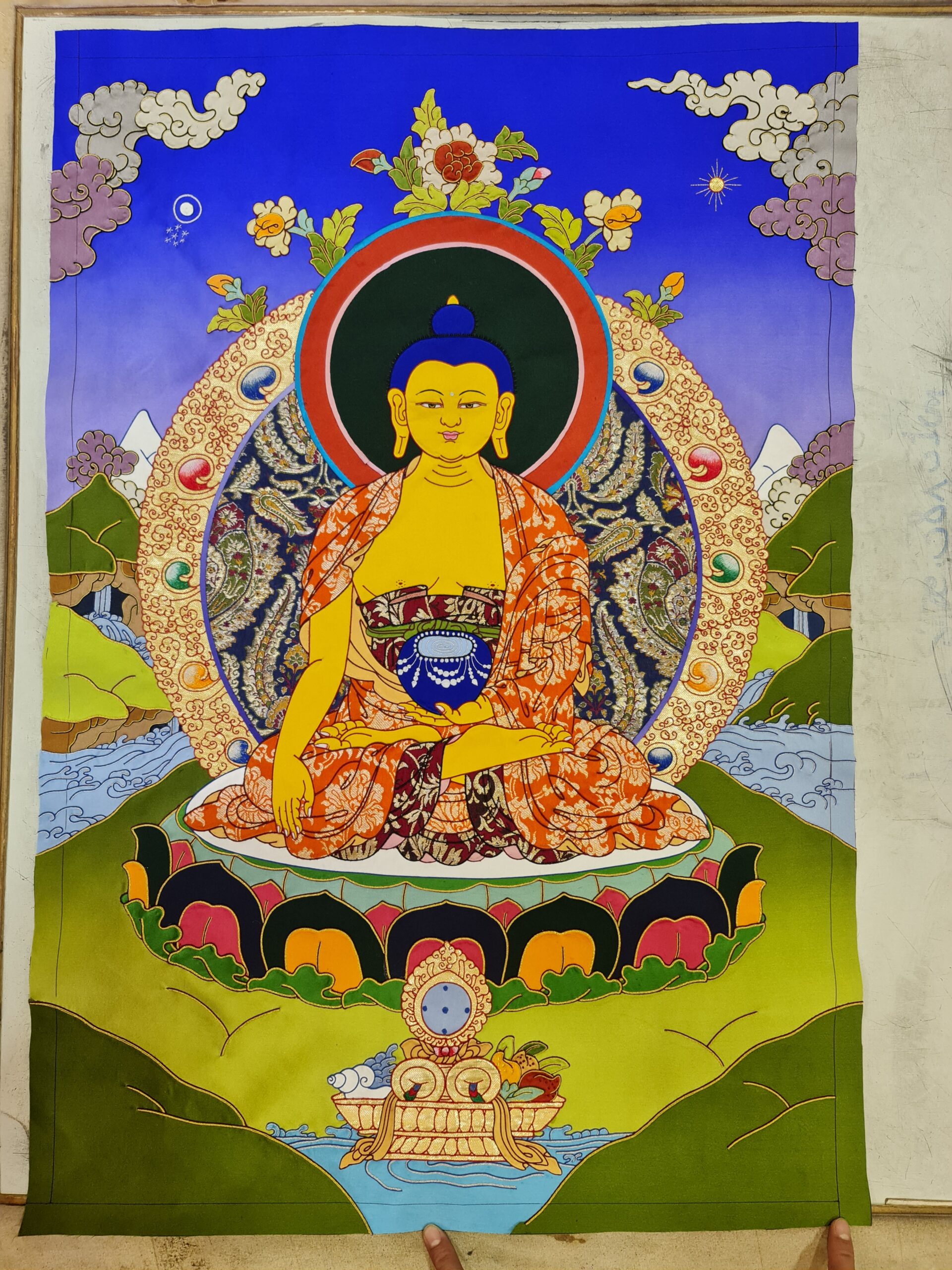
Shakaymuni Buddha Applique
Applique Thanka, known in Tibetan as göchen thangka (precious-cloth scroll images) or göku (cloth images), the art of appliqué first began among the Huns of Central Asia to embroider saddle blankets. Gradually, it spread east across the Silk Road, and was adopted by Tibetans as a religious art form. During the 15th century fabric thangka using indigenous appliqué technique materialised. These richly embroidered and appliquéd thangkas quickly gained popularity in Tibet. Appliquéd thangkas are often thought of as superior to painted thangkas due to their high quality materials, durability, suppleness and their ability to last many generations. All pieces are masterfully hand stitched using special embroidery techniques. In Tibet, the highly regarded skill of thangka making has traditionally been passed on from senior monks to the younger generation. Unfortunately, this tradition has largely been lost in Tibet. Though it has resurfaced with the exiled Tibetans in India. It is of historic importance to preserve this sacred art form, as it holds great cultural and religious significance to Tibetans and Buddhists worldwide.
Shakyamuni Buddha
Shakyamuni was born a prince, but from a young age he became aware of and was profoundly troubled by the problem of human suffering. He became increasingly possessed by a longing to abandon the secular world and go out in search of a solution to the inherent sufferings of life. Buddhist scriptures describe four encounters which served to awaken in him an awareness of four sufferings common to all people—birth, aging, sickness and death—and a desire to seek their solution. Eventually he renounced his princely status and embarked on a spiritual quest to understand how human suffering could be overcome.
Life of Shakyamuni:
For several years, he subjected himself to ascetic disciplines but found it impossible to reach emancipation through such self-mortification, and eventually rejected these practices. Then, near the city of Gaya, he seated himself under a pipal tree and entered meditation. There he attained an awakening, or enlightenment, to the true nature of life and all things. It was because of this enlightenment that he came to be called Buddha, or “Awakened One.” After his awakening, Shakyamuni is said to have remained for a while beneath the tree, rejoicing in his emancipation yet troubled by the knowledge of how difficult it would be to communicate what he had realized to others. At length, however, he resolved to do so, so that the way to liberation from the sufferings of birth and death would be open to all people. According to tradition, Shakyamuni then traveled widely throughout the Indian subcontinent sharing his enlightened wisdom, promoting peace and teaching people how to unleash the great potential of their lives. His compassionate intention was to enable all people to attain the same awakened state of life that he had attained. It is thought that Shakyamuni died at age 80. Following his death, his teachings were recorded by his disciples in the form of sutras and spread throughout Asia, giving rise to a number of distinct schools of Buddhism, generally characterized by an emphasis on peace and compassion.
Size:
Size without Brocade: 22 inches by 33 inches


Reviews
There are no reviews yet.